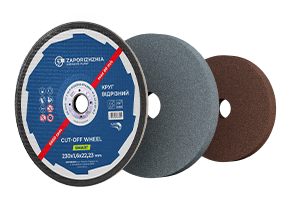
During a two-week business trip in June, Mykhailo Polievtsov, head of the customer service center of Zaporizhabrasive PJSC, visited about a hundred companies with the aim of expanding the client base. His route passed through 14 cities and towns in the west of the country, such as Zhytomyr, Rivne, Lviv, Uzhhorod, Mukachevo, Kolomyia, Ivano-Frankivsk, Chernivtsi, Khmelnytskyi, and others. There he held negotiations with potential customers, and also met with customers with whom the plant works through the dealer network. About the results of the trip and the main trends in the market of abrasive tools – in an interview with the head of the Customer Service Center Mykhailo Polievtsov.
– Mykhailo, during your business trip you had quite a busy schedule of meetings planned. What companies have been in talks with, and what part of these talks do you think has a future?
– Yes, the schedule was full, despite the fact that many clients to whom I planned to go stopped their activities: they were either mobilized or went abroad. On average, in each city, I held meetings with somewhere between six and seven clients. First of all, these are companies that have stores and can become new trading platforms for the sale of our abrasive tools. They were given commercial offers for cutting, scraping and grinding wheels manufactured by the plant, and mutually beneficial terms of cooperation were offered. Some of these customers have already ordered our products, with some we continue to negotiate. In general, our range is not widely distributed in the western part of the country, because there are companies there that have been working with other suppliers of abrasive tools for more than 10 years – with our competitors, and they are in no hurry to launch someone new into their stores. However, the prospect of changing this situation is always there. Of all the negotiations that were held during this business trip, about 20% gave a positive result. That is, these are our future clients. Two of them are potential customers under the Private Label program.
Also during the trip there was a meeting with representatives of companies that already cooperate with our dealers. That is, their assortment includes JSC products, but they order them through intermediaries – our other customers. During such meetings, we discussed the dynamics of sales, I presented our novelties and developments in the field of product quality improvement. After all, one of the main goals of communication with this segment of customers is to confirm that our plant has a serious policy of promoting its products in all regions of Ukraine.
– What instrument and for whom will Zaporizhabrasive produce under the Private Label program?
– During my stay in Lviv, I had a rather fruitful meeting with the VIROK company. This is one of the most powerful companies that has been working on the domestic tool market for more than 25 years. It has about 140 sales representatives throughout Ukraine, three logistics hubs (a logistics hub is a large-scale warehouse complex where you can process huge volumes of cargo. – Ed. note) – in Lviv, Kharkiv and Kyiv, as well as an online tool store “1001 Trivia”. We agreed with this company that we will manufacture ceramic circles for it under Private Label. We are talking about ceramics, which we will produce as a novelty, with new forms. In the near future, our production should introduce these positions into the assortment.
– Which of the plant’s tools is in the greatest demand among customers – ceramic, bakelite, or cutting – off wheels?
– 90% are cutting and cleaning wheels, 10% are wheels on a ceramic bond. Unfortunately, there is no demand for bakelite instruments in the retail market. Its main customers are industrial enterprises.
– Are there any other activities to attract new customers?
– After a business trip to the western regions, I went to Mykolaiv. It was a separate two-day trip, during which I met with representatives of commercial enterprises that already cooperate or have agreed to cooperate with us. The goal was to agree that during the tenders, they would exhibit the abrasive tool as a separate lot, so that our plant could participate in them. Because when we previously submitted an application for participation in the tender, there was a whole assortment, for example, not only abrasive tools, but also diamond tools, which ZAK does not produce. And our commercial offer was rejected. Now we will apply only for our lot, and this will significantly increase our chances of winning the auction.
We are currently negotiating cooperation with large chains of construction supermarkets, such as “33 square meters”, “Oldi-Group” and “Ars-Keramika” – each of these companies has an average of 5 construction supermarkets. And also with online stores “Rozetka” and “Epicentr” regarding placement of our abrasive tool on these sites.
– And how long can such negotiations last before a potential client agrees to cooperation?
– No more than 2-3% of the total number of clients who agree to cooperate after the first communication. The rest have to be negotiated for several months.
Here, for example, the customer service center has already worked with about 700 new companies. Currently, some of them are not ready to expand their line, some do not want to launch a new supplier, because any new product, before the demand for it is formed, is studied by buyers for about 3-4 months. Negotiations with these companies are ongoing, and we expect a result in about four months. That is why we are trying to reach as many potential customers as possible and we are systematically working to attract them to cooperation.
— Summarizing the results of the trip to the western regions of Ukraine, how can you outline the main trends of the abrasive tool market?
– The market is difficult – there is practically no retail buyer. Not because of low solvency, but because of the war and mobilization: there are practically no men in the shops. The sellers themselves work several days a week, and this also affects the realization of the abrasive tool. After the end of the war, I think the demand for abrasive tools will at least double and potentially we will be able to sell about two million wheels per month. A large-scale reconstruction will begin, and the market will need it. However, today’s life is also not standing still, and we have positive dynamics in terms of attracting new customers who are interested in purchasing our abrasive tool.